Trust Wallet –
Cryptocurrencies have become more than just an investment; they are an integral part of a growing digital economy. With this growth comes the responsibility of keeping your assets secure. A mobile wallet that prioritizes security, accessibility, and usability is essential, and Trust Wallet is one of the leading options available today.
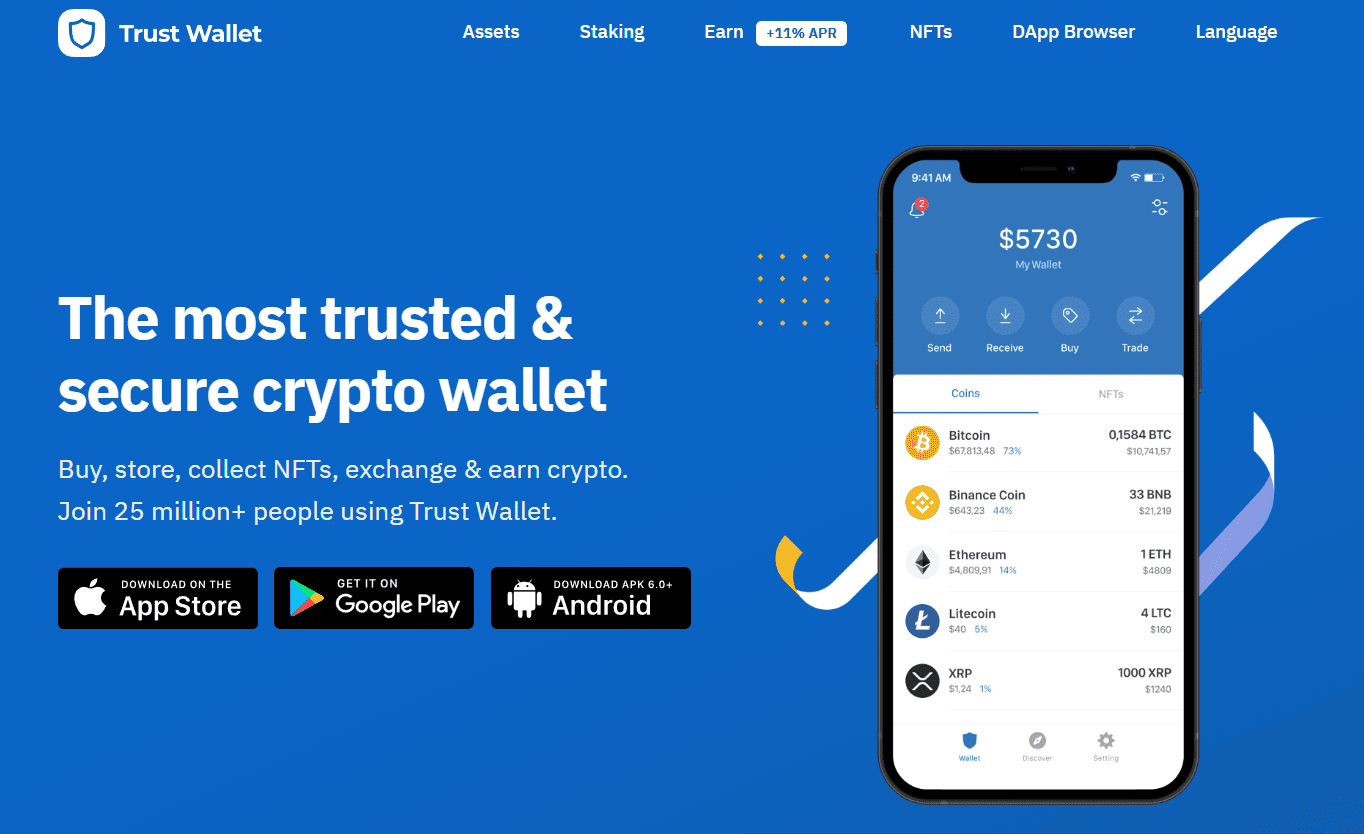
Trust Wallet is a non-custodial mobile wallet, meaning only you control your private keys and recovery phrase. Unlike exchange wallets, which store your assets online, Trust Wallet allows you to manage your crypto offline while still providing advanced features like staking, token swaps, NFT management, and decentralized application (DApp) connectivity.
This comprehensive guide will cover everything you need to know about Trust Wallet in 2025, from installation and setup to advanced security strategies and long-term best practices.
What is Trust Wallet?
Trust Wallet is a mobile cryptocurrency wallet available for iOS and Android devices. It was designed to provide security, flexibility, and ease of use for both beginners and advanced users.
Key Features:
Non-custodial wallet: You control the private keys; the wallet cannot access your funds.
Multi-coin support: Store thousands of cryptocurrencies, including BTC, ETH, BNB, and tokens on Ethereum, Binance Smart Chain, and other networks.
DApp browser: Connect to decentralized applications directly from your wallet.
Built-in token swap: Trade crypto tokens without leaving the app.
Staking capabilities: Earn passive income by staking supported coins.
NFT storage: Manage and view NFTs compatible with Ethereum and Binance Smart Chain.
Trust Wallet is both a secure storage solution and a gateway to the decentralized finance (DeFi) ecosystem, giving users full control of their crypto assets.
Step 1: Download and Install Trust Wallet
Visit the official website at https://trustwallet.com
.
Choose your platform (iOS or Android) and download the app from the App Store or Google Play Store.
Open the app after installation.
Choose between Create a New Wallet or Import Wallet if you already have a recovery phrase.
Only use official sources for downloading the wallet. Fake apps can steal your funds.
Step 2: Setting Up Your Wallet
After downloading, the wallet setup process is simple but crucial for security:
Create a secure PIN or password to protect your wallet from unauthorized access.
Trust Wallet will generate a 12-word recovery phrase (seed phrase). Write this down carefully.
Confirm the 12 words in the correct order to complete the setup.
Your recovery phrase is the only way to restore your wallet if your phone is lost, stolen, or damaged. Never share it with anyone or store it online.
Step 3: Adding Cryptocurrencies
Once your wallet is ready, you can add supported cryptocurrencies:
Tap + Add Tokens on the main wallet screen.
Search for the desired cryptocurrency (e.g., BTC, ETH, BNB).
Tap Enable to add it to your wallet interface.
Now you can view balances, transaction history, and manage multiple crypto assets from a single app interface.
Step 4: Sending and Receiving Cryptocurrency
Sending Crypto:
Select the cryptocurrency to send.
Tap Send and enter the recipient’s wallet address.
Input the amount and confirm the network (if applicable).
Review the transaction on-screen and approve it.
Receiving Crypto:
Select the cryptocurrency to receive.
Tap Receive to display your wallet address or QR code.
Share the address with the sender securely.
Always double-check wallet addresses. Blockchain transactions are irreversible, so a small mistake can result in permanent loss.
Step 5: Token Swap Feature
Trust Wallet allows users to swap tokens without leaving the app, providing convenience and saving fees:
Open the Swap/Exchange tab.
Select the token you want to swap and the token you wish to receive.
Check the exchange rate and transaction fee.
Confirm the swap to execute the transaction.
This eliminates the need for external exchanges for small trades and simplifies token management.
Step 6: Staking Cryptocurrencies
Staking is a feature that allows you to earn passive income by holding coins in your wallet. Trust Wallet supports staking for several cryptocurrencies, such as BNB, TRX, ADA, and ATOM.
Steps to stake:
Open the cryptocurrency you want to stake.
Tap Stake or Earn Rewards.
Choose a validator (for proof-of-stake coins).
Confirm the amount and complete the process.
Staking rewards vary depending on the coin and validator. Trust Wallet makes the process simple for beginners.
Step 7: Connecting to Decentralized Applications (DApps)
The DApp browser in Trust Wallet allows users to interact with decentralized applications like DeFi protocols, NFT marketplaces, and decentralized exchanges:
Open the Browser tab.
Visit a trusted DApp (e.g., PancakeSwap, Uniswap, OpenSea).
Connect your Trust Wallet to the DApp.
Approve transactions and manage assets securely.
Using DApps expands your wallet's utility but always verify the DApp’s legitimacy to avoid scams.
Step 8: NFT Management
Trust Wallet supports NFTs, allowing you to store and view digital collectibles:
Open the NFT tab in the wallet.
Add NFTs by connecting to supported networks like Ethereum or Binance Smart Chain.
View, send, or receive NFTs safely within the app.
Always ensure the NFT contract address is correct to avoid losing assets.
Step 9: Security Best Practices
Trust Wallet is highly secure if you follow these tips:
Never share your recovery phrase or PIN.
Enable biometric authentication (fingerprint or Face ID) for convenience and security.
Avoid using public Wi-Fi or untrusted devices to access your wallet.
Keep your mobile OS and app updated.
Consider a hardware wallet for storing large crypto holdings.
Only connect to verified DApps.
These precautions prevent theft, phishing, and unauthorized access.
Step 10: Troubleshooting Common Issues
Lost recovery phrase: Wallet cannot be restored. Always keep it offline and safe.
Stuck or pending transactions: Check blockchain status and adjust network fees if necessary.
App crashes or won’t open: Reinstall the app or clear cache.
Tokens not visible: Add tokens manually using the contract address.
Keeping backup copies of your recovery phrase and wallet data is essential for problem resolution.
Step 11: Advanced Tips for Trust Wallet Users
Multiple Wallets: Create separate wallets for different purposes (trading, holding, staking).
Hidden Wallets: Use passphrases to create hidden wallets for enhanced security.
Portfolio Tracking: Use the app to monitor balances, staking rewards, and transaction history.
Secure DApp Usage: Always verify DApp URLs and permissions before connecting.
Offline Recovery Phrase Storage: Consider metal backups or secure physical storage for long-term safety.
These strategies help users maximize both convenience and security.
Step 12: Trust Wallet Fees
Trust Wallet does not charge service fees.
Blockchain network fees still apply for transactions and swaps.
Staking rewards may incur small network fees depending on the coin and validator.
Always check transaction fees before executing a trade or transfer to avoid surprises.
Step 13: Trust Wallet Mobile vs. Desktop
Trust Wallet is a mobile-first wallet, but you can interact with desktop platforms through WalletConnect:
Mobile: Primary management for crypto, DApps, staking, and NFTs.
Desktop via WalletConnect: Connect to supported DApps and exchanges securely without exposing private keys.
This provides flexibility for users who prefer desktop interfaces for complex DeFi interactions.
Step 14: Long-Term Wallet Security Recommendations
Regularly update the app and mobile OS to patch security vulnerabilities.
Use biometric authentication for everyday access.
Consider hardware wallet integration for high-value holdings.
Monitor transactions regularly for unusual activity.
Store multiple copies of your recovery phrase offline in secure locations.
Long-term security is a combination of proper device management, backup practices, and cautious digital behavior.
Step 15: Frequently Asked Questions
Q1: Is Trust Wallet safe?
A1: Yes, it’s non-custodial. Security depends on the protection of your recovery phrase and PIN.
Q2: Can I restore my wallet on a new device?
A2: Yes, using your 12-word recovery phrase.
Q3: Can I manage NFTs with Trust Wallet?
A3: Yes, it supports Ethereum and Binance Smart Chain NFTs.
Q4: Does Trust Wallet charge fees?
A4: The app is free, but network transaction fees apply.
Q5: Can I stake crypto in Trust Wallet?
A5: Yes, supported coins can be staked directly for passive income.
Conclusion
Trust Wallet is a comprehensive, secure, and user-friendly mobile wallet that allows users to manage cryptocurrencies, NFTs, staking, and DApps in one interface. By controlling your private keys, using the app’s security features, and following best practices, you can confidently hold and grow your digital assets in 2025 and beyond.
Whether you are sending and receiving crypto, swapping tokens, staking for rewards, or engaging with DeFi, Trust Wallet provides a reliable and secure solution. It is more than a wallet—it is a gateway to the decentralized digital economy, putting full control and flexibility in your hands.
Start using Trust Wallet today to take full control of your cryptocurrency portfolio while maintaining the highest level of security.